

What could healthcare look like in 2035 – if we act with the urgency that rare diseases demand?
At DIA Europe 2026 panel session in Rotterdam (Netherlands), chaired and convened by Estelle Michael (UCB), IRDiRC members helped set the scene for a discussion on a future healthcare ecosystem, and why time matters. During the discussion, Fleur Chandler (Duchenne UK) reminded us of a stark reality: around 70% of rare diseases affect children, and approximately 30% of those children die before the age of five. The implication is clear – if progress takes another decade, we risk losing entire generations of children while we deliberate.
Against this backdrop, the panel explored a shared vision for a healthcare ecosystem that learns continuously and acts earlier:
- Every patient generates standardised outcomes data that can be used by regulatory and reimbursement agencies
- Every therapy generates reusable evidence
- Every regulatory and reimbursement decision improves the next one
- Every new diagnosis triggers a defined therapy pathway
- Prevention replaces rescue as the dominant paradigm
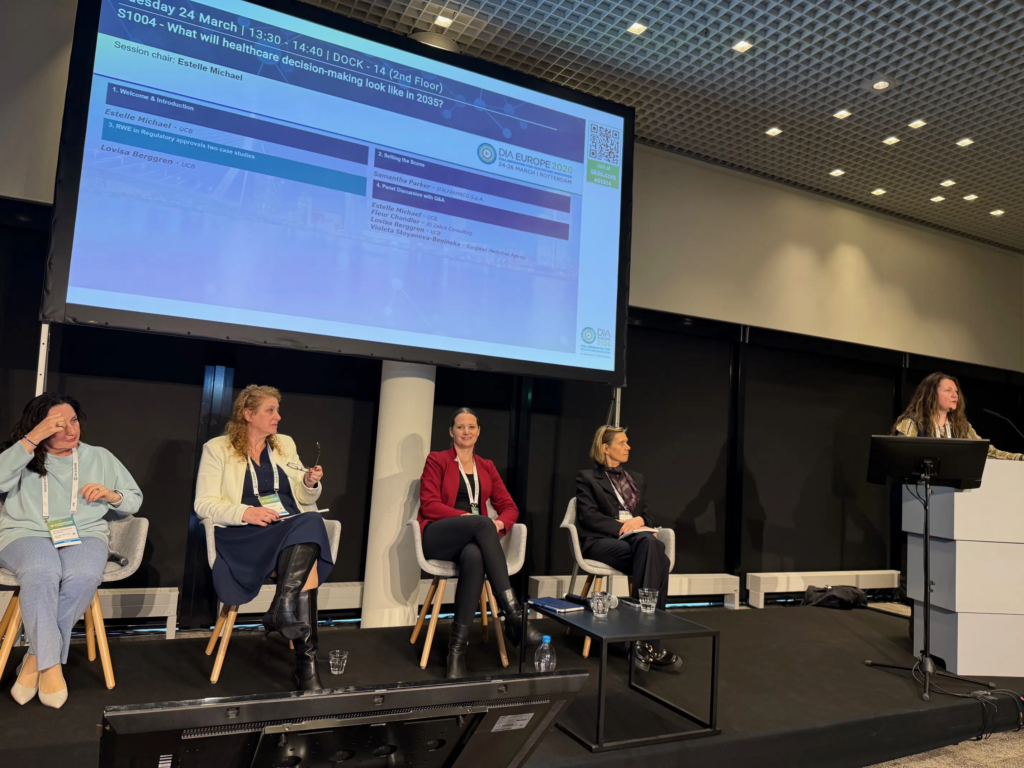
IRDiRC members on the panel contributed perspectives from across regulation, industry, and patient organisations – highlighting how quality data, shared evidence frameworks, improved access, and collaboration are essential to making this vision achievable.
Thank you to the panellists for a thoughtful and forward‑looking exchange: Samantha Parker (ITALFARMACO S.P.A., IRDiRC), Violeta Stoyanova-Beninska (European Medicines Agency), Fleur Chandler (Duchenne UK), Lovisa Berggeren (UCB), and to Estelle Michael (UCB) for bringing the session together and guiding the conversation.
At IRDiRC, this vision reflects a direction of travel already underway – through practical tools, shared frameworks, and global collaboration across the rare disease ecosystem.